
CHIPS:
National centre of excellence
in microelectronics
at POLITEHNICA Bucharest
Under the CHIPS initiative, the National University of Science and Technology POLITEHNICA coordinates research projects and the development of a national microelectronics hub in Bucharest.
WHY CHIPS
Chips are the brains of modern technology
Used in cars, computers, phones and medical equipment, chips are essential components of the systems that keep the economy moving.
The National University of Science and Technology POLITEHNICA Bucharest aims to become a research and development hub for Romania’s microelectronics industry, creating a space where innovative technologies are designed, tested and validated to transform the products we all use every day.

Seven research projects are currently underway under the CHIPS initiative, covering seven areas essential to the development of the national microelectronics ecosystem.
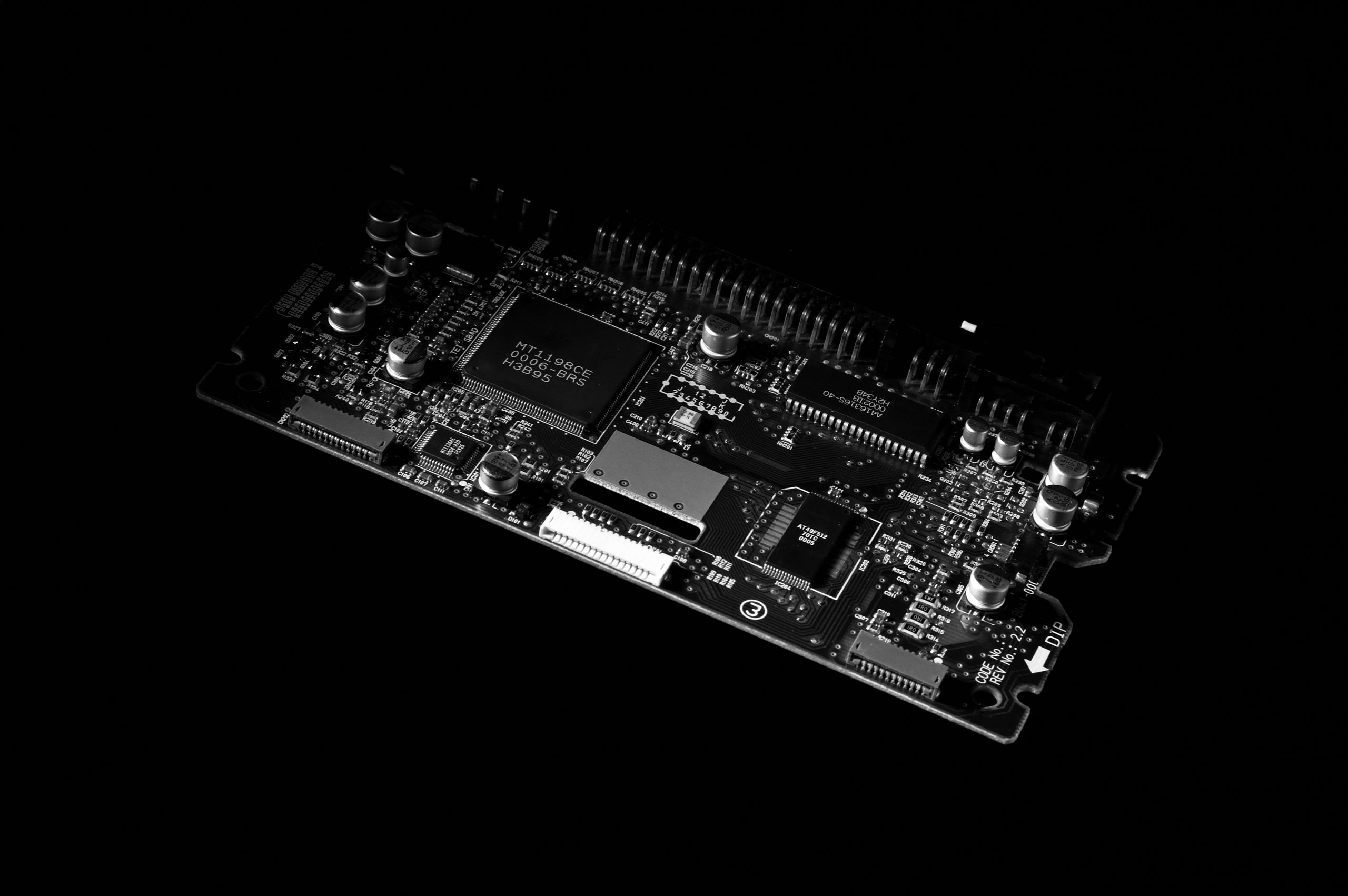

The projects coordinated by POLITEHNICA Bucharest have secured more than €120 million in funding for research, infrastructure and the training of microelectronics specialists.
CHIPS supports key areas for both industry and specialist training.
Each year, POLITEHNICA Bucharest trains hundreds of graduates in electronics, mechatronics, telecommunications and information technology. Microelectronics is a strategic field. Through these projects, together with our industrial partners, we will accelerate research, development and innovation in Romania, helping build a stronger, more modern, technology-driven economy.
Advanced packaging
Research into advanced chip packaging and assembly that will enable multiple chips to be combined into a single compact assembly that is faster, more energy-efficient and more reliable.
Hardware/software design and accelerators
Innovation in the development of dedicated circuits — accelerators — designed for specific tasks and optimised for speed and lower power consumption.
Integrated circuit and chip design
Innovation in integrated circuit architecture to optimise chip performance, power consumption and reliability.
Digital Twin
Development of digital twin solutions that enable a system to be tested, monitored and optimised before it is physically built or modified.
Chip security
Research into security systems that protect chips from the design stage onwards against threats that exploit power consumption, electromagnetic emissions or other device signals.
Artificial intelligence for the automotive industry
Research and development of artificial intelligence algorithms that interpret a vehicle’s surroundings and make decisions that improve road safety.
Radar, sensors and communications for the automotive industry
Design of radar and sensor systems that detect obstacles, pedestrians and other vehicles and operate reliably in all weather conditions.
Ongoing projects under the CHIPS initiative
Towards Higher Involvement of Knowledge Significantly Enhancing Nearer for Sustainable Europe
The project will cover research into 3D modelling, digital twins, reconfigurable hardware architectures and electromagnetic compatibility. It is an IPCEI project, with POLITEHNICA Bucharest participating as an indirect partner in the Robert Bosch ecosystem.
Design, Implementation and Reliability Validation of New Heterogeneous Integration Structures for Asset-IXC
The project will cover research into advanced packaging, the characterisation and modelling of materials for electronics, parallel computing systems, and the design and testing of computing architectures. It is an IPCEI project, with POLITEHNICA Bucharest participating as an indirect partner in the Aumovio ecosystem.
Advanced Microelectronics Technologies for the Development of Sensors and Actuators for ASSET-IXC
The project will cover research into advanced packaging, SMT component placement on PCBs and precision optical systems. It is an IPCEI project, with POLITEHNICA Bucharest participating as an indirect partner in the Aumovio ecosystem.
National Platform for Semiconductor Technologies
The project’s main objective is to develop state-of-the-art pilot lines and microproduction facilities to support technological progress in semiconductors. The platform will develop specific technologies to enable SMEs to participate actively in the semiconductor industry.
National Competence Centre for Semiconductors
The project positions Romania as a key hub in the revival of the European semiconductor industry and provides easy access to state-of-the-art infrastructure, expertise and collaborative networks in semiconductors, sensors, robotics and intelligent systems.
European Pilot Line for Next-Generation Advanced System-on-Chip Technologies Beyond 2 nm (NanoIC)
The NanoIC project aims to put the European Chips Act’s vision for leadership and competitiveness in system-on-chip technology innovation into practice.

Contact the CHIPS team
For information about CHIPS projects, ongoing research or potential partnerships, please contact us using the form below.